Stretch Ceilings: Complete Guide to Materials, Installation and Applications
Comprehensive guide to stretch ceilings: membrane materials (PVC, polyester fabric), surface finishes (matte,

06.04.2026 | Interior Inspirations
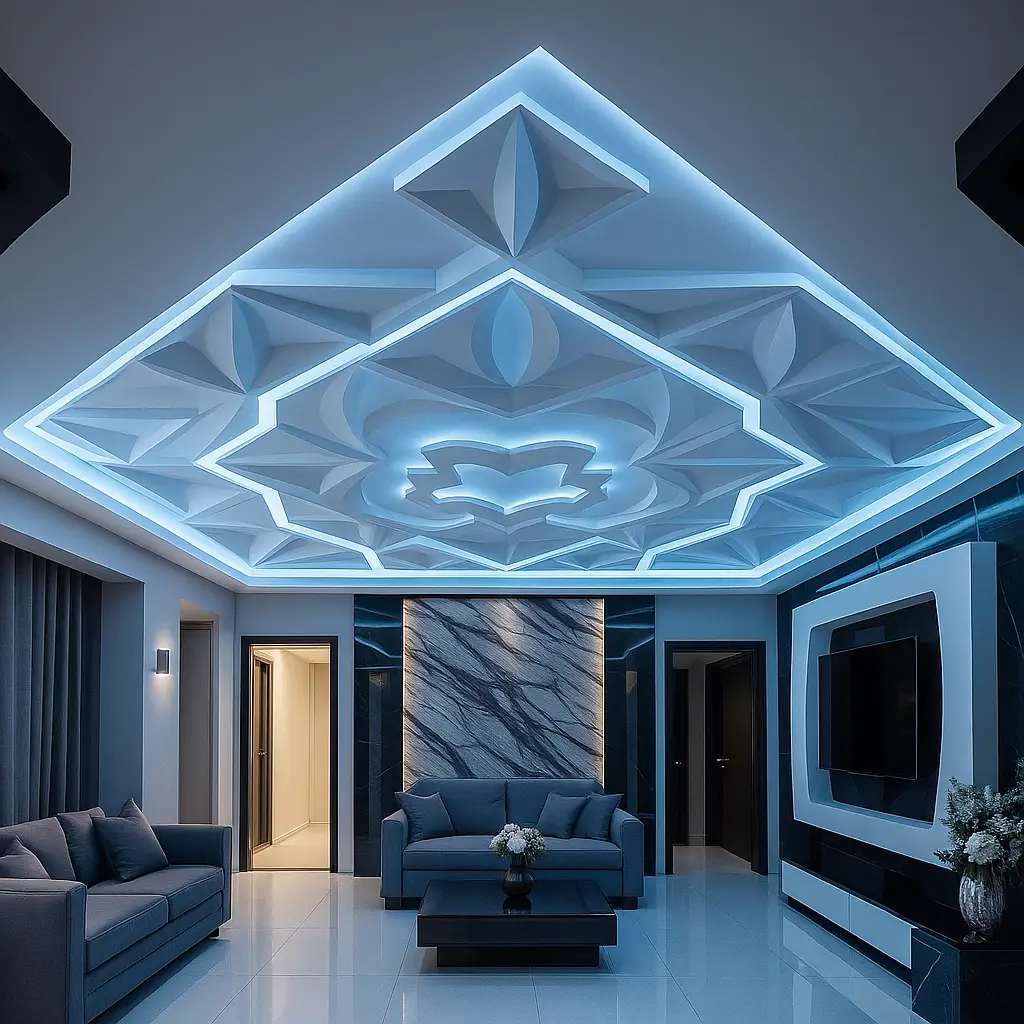
3D stretch ceilings combine custom-printed membranes with LED backlighting to produce striking three-dimensional visual effects. The technology is widely used in residential interiors, hospitality, wellness centres, and commercial showrooms. This guide covers printing technologies, membrane materials, LED backlighting options, mounting profiles, and technical requirements for 3D stretch ceiling installations.
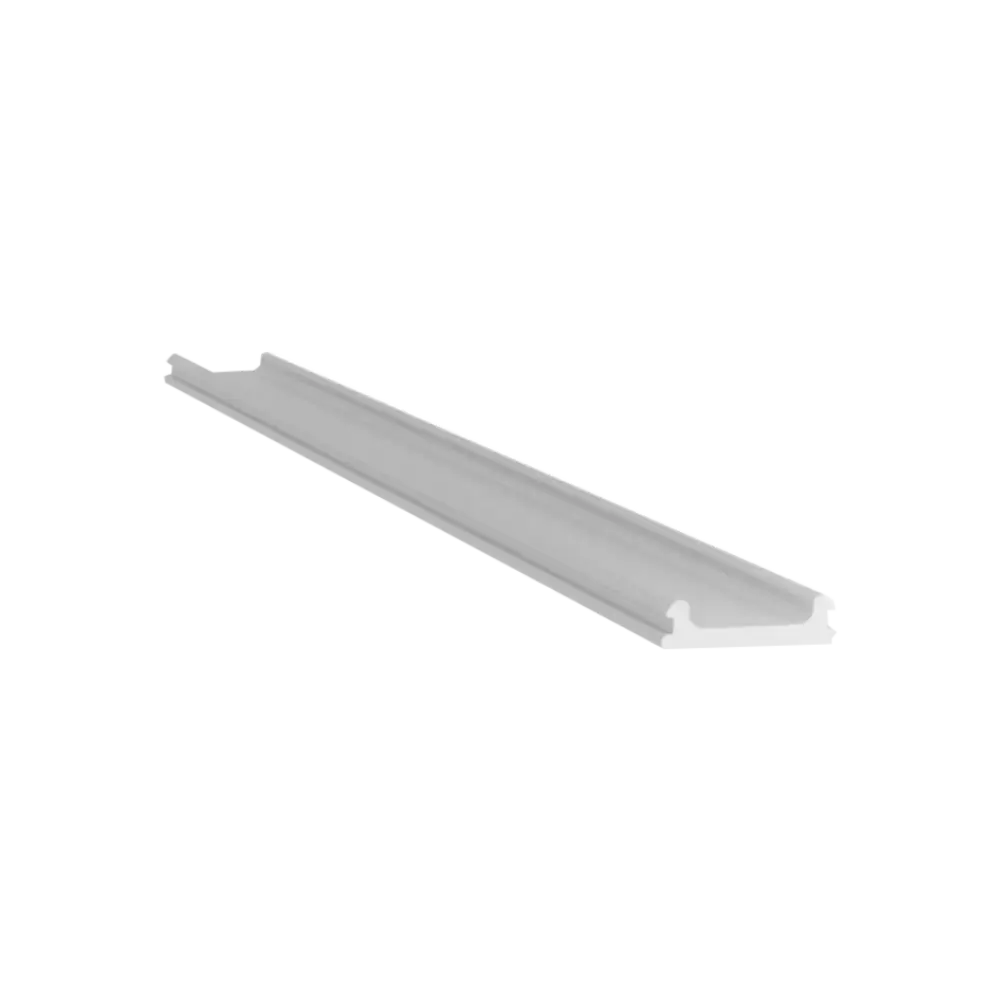
A 3D stretch ceiling consists of three components: a perimeter aluminium profile fixed to the walls, a printed membrane, and an LED backlighting system installed between the structural ceiling and the membrane. The printed membrane is translucent (light-transmitting), and the LED backlighting behind it makes the graphic visible and creates a perception of depth. The stronger and more even the light, the more pronounced the 3D effect.
Two main printing methods are used for stretch ceiling graphics:
UV printing uses inks cured by ultraviolet radiation. Key specifications:
UV printing is preferred for backlit ceilings because UV-cured ink does not fully block light transmission. The graphic retains colour saturation and readability whether the backlighting is on or off.
Eco-solvent printing uses organic solvent-based inks. Key specifications:
Eco-solvent printing is mainly used on polyester fabric membranes, which do not require heating during installation. Fabric with solvent printing is opaque, so backlighting effects are limited.
| Material | Thickness (mm) | Max width | Backlighting | Installation |
|---|---|---|---|---|
| Translucent PVC film | 0.18-0.22 | up to 5000 mm | Yes (full translucency) | Heat gun (40-50 C) |
| Satin PVC film | 0.18-0.22 | up to 5000 mm | Partial | Heat gun (40-50 C) |
| Matte PVC film | 0.18-0.22 | up to 5000 mm | Minimal | Heat gun (40-50 C) |
| Polyester fabric | 0.30-0.35 | up to 5100 mm | No (opaque) | Cold fit (no heating) |
Translucent PVC film is the optimal choice for 3D ceilings with LED backlighting. It transmits light evenly, keeping the print readable both with backlighting off and on.
3D ceiling backlighting requires uniform light distribution across the entire membrane surface. Two methods are commonly used:
LED modules are the standard solution for 3D ceilings. Mounted on the structural ceiling in a grid with 80-100 mm spacing, they ensure even light across the full area. Lens-type modules with a 160-170 degree beam angle are preferred because they eliminate hot spots.
The minimum distance between the modules and the membrane (backlighting depth) is 150 mm. At shorter distances, individual modules may show through the membrane as brighter points.
LED strips are used for perimeter backlighting or for small ceilings (up to 2 m2). Strips are mounted in LED profiles around the ceiling perimeter and produce light that radiates from the edges toward the centre. For large surfaces, strips alone do not provide sufficiently even central illumination.
RGB and RGBW modules allow colour-changing backlighting that transforms the graphic’s mood. For example, a sky graphic shifts character under blue lighting (day) versus purple lighting (dusk). Control is handled via LED controllers and remote controls.
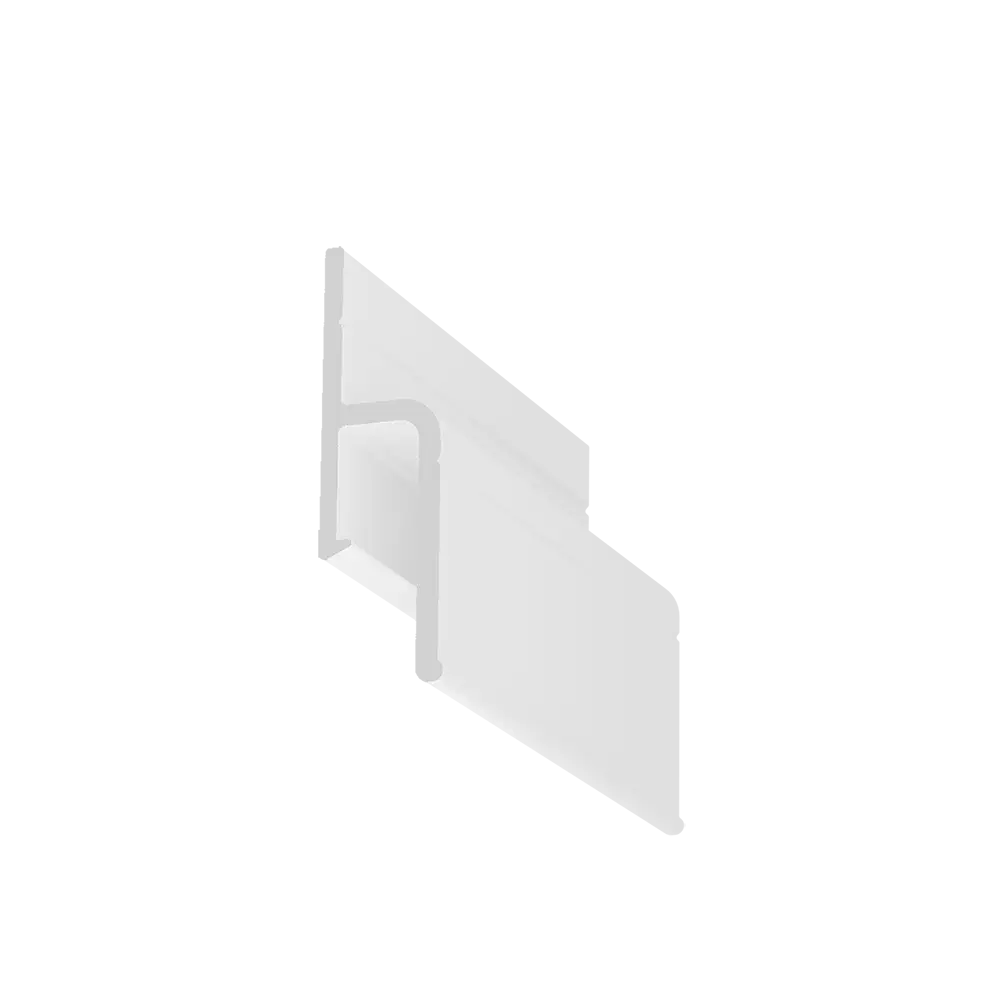
3D stretch ceilings use the same perimeter profiles as standard stretch ceilings. Profile choice depends on the required drop (backlighting depth) and mounting type:
View the full stretch ceiling profile catalogue at 2K-Trade.
The total cost for a 15-20 m2 room typically ranges from EUR 80-120/m2 net. This includes the printed membrane, perimeter profile, LED backlighting system (modules + power supply), and labour. The exact price depends on the chosen graphic, backlighting type, and installation complexity.
Yes. The perimeter profiles and LED backlighting system stay in place. Only the printed membrane is replaced. Removing the old membrane and installing a new one takes 2-4 hours for a 20 m2 room. No construction work is needed.
The minimum room height is 270 cm. A 3D ceiling requires a 150-200 mm drop from the structural ceiling for backlighting, leaving an effective height of 250-255 cm. In rooms below 270 cm, a 3D ceiling may feel oppressive.
Yes. PVC film is fully waterproof and suitable for bathrooms, swimming pools, and high-humidity spaces. The membrane can also withstand flooding from above (e.g. a burst pipe) — it holds up to 100 kg/m2 of water, which can then be drained without damaging the graphic.
Full installation of a 3D ceiling (profiles + LED backlighting + membrane) takes 4-8 hours for a 15-20 m2 room. Time depends on room shape complexity, number of corners, and backlighting type. The process is dust-free, allowing installation in furnished rooms.
Comprehensive guide to stretch ceilings: membrane materials (PVC, polyester fabric), surface finishes (matte,
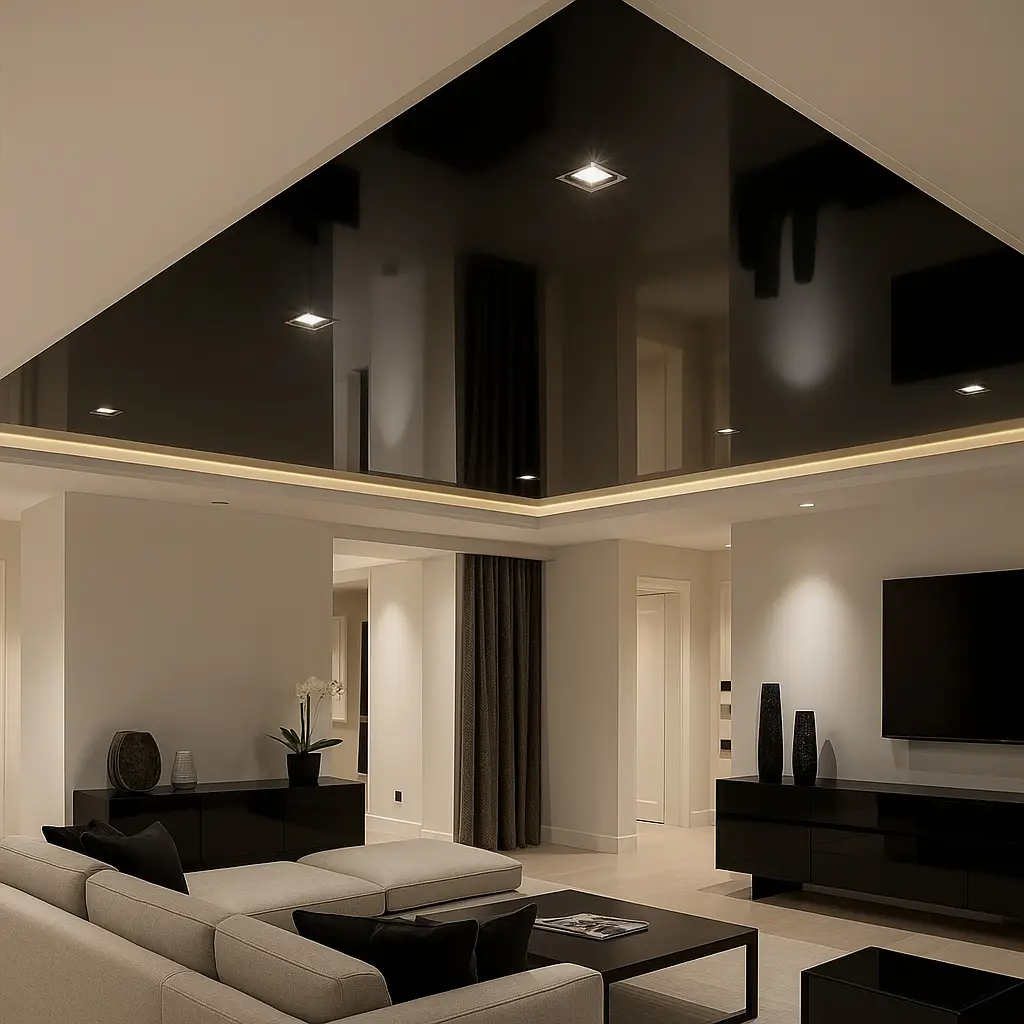
A black stretch ceiling is a PVC or fabric membrane in black, mounted
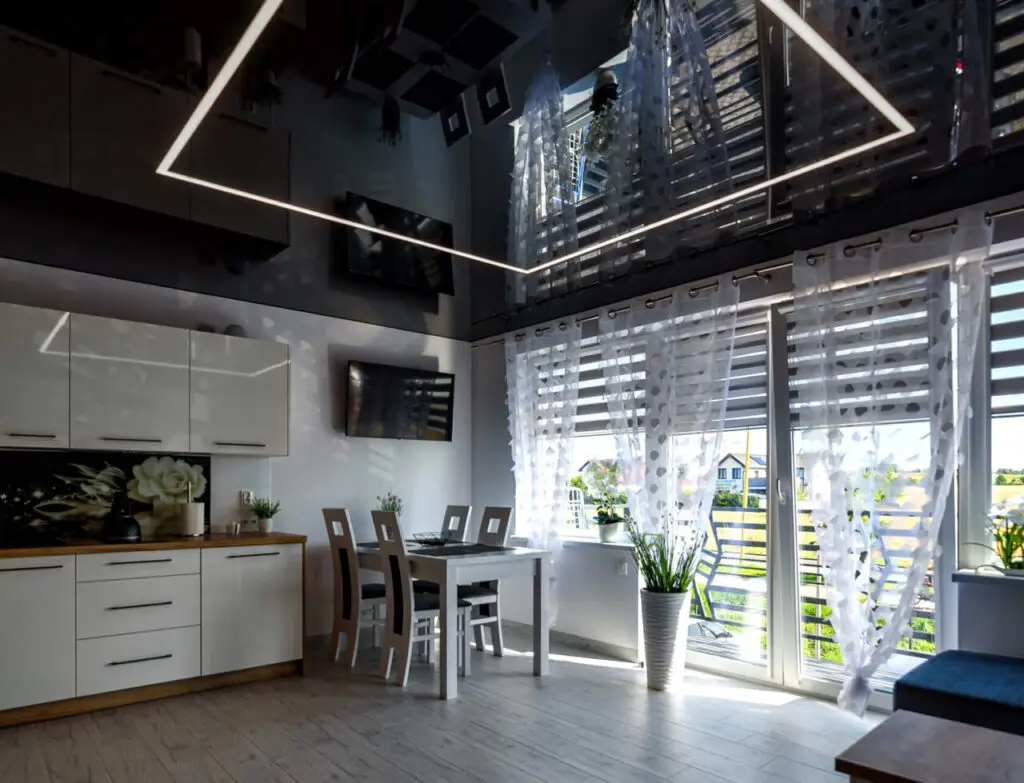
A black stretch ceiling from 2K-Trade is an elegant architectural solution that visually
Cart is empty
Go to shop