Recessed LED Profiles: Types, Installation and Component Selection
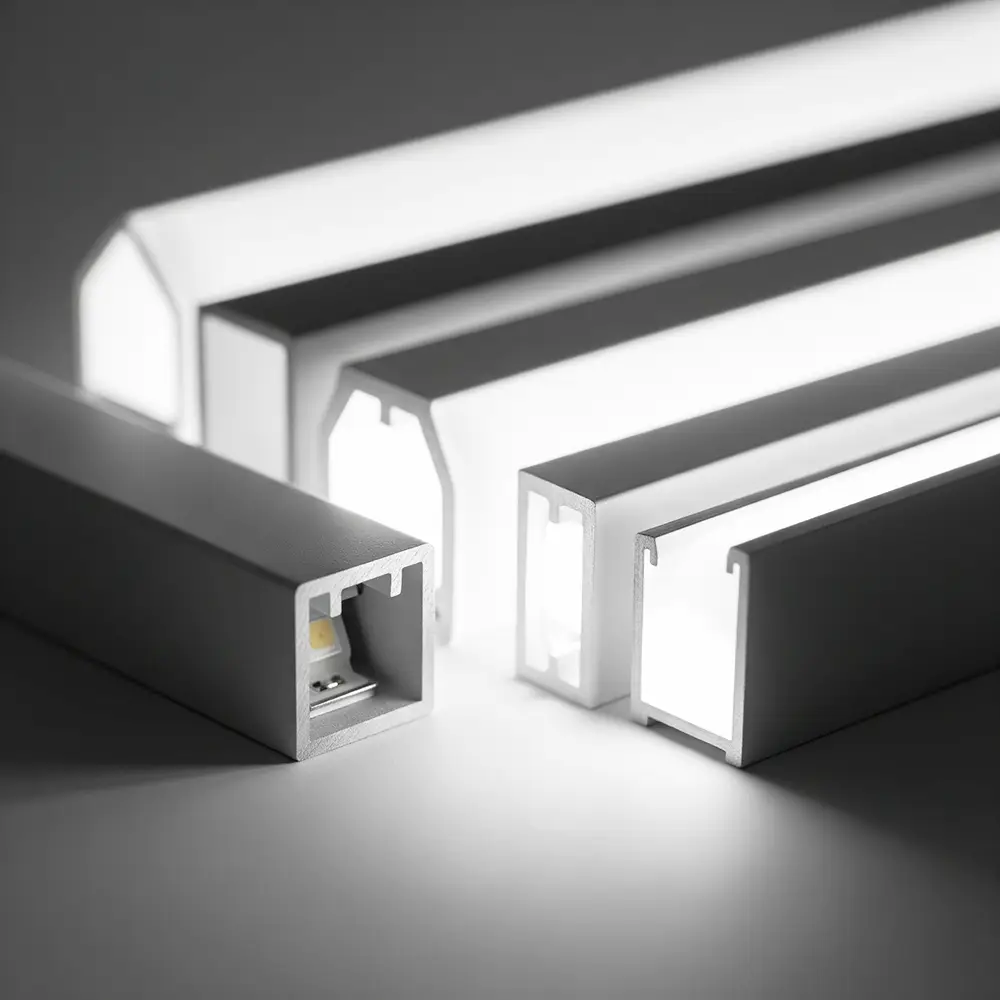
Guide to recessed LED profiles: types (GAMMA series for stretch ceilings, GK LINE

06.04.2026 | LED Lighting
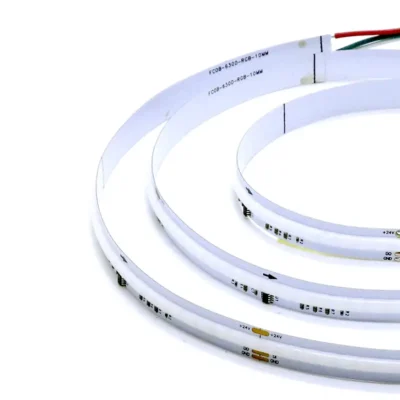
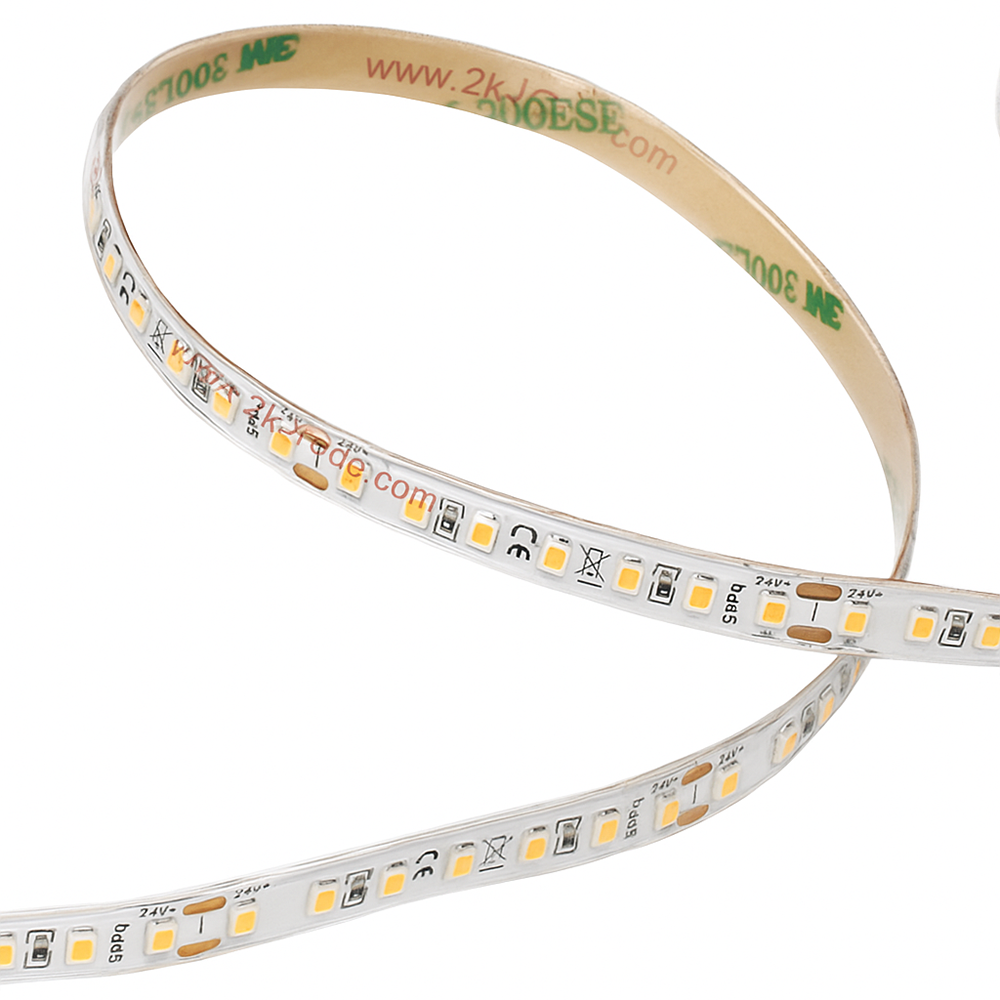
Running a continuous 10-metre LED strip is one of the most common requirements in architectural and commercial lighting projects. While LED strips are sold on 5 m or 10 m reels, simply connecting a full reel to a power supply and expecting even brightness is not realistic. This guide explains how to plan a 10 m LED strip installation correctly, covering power supply sizing, voltage drop solutions, cutting and joining, and wiring diagrams.
The first step is calculating the total power draw and choosing a power supply with adequate capacity. The formula is straightforward:
Total power (W) = strip power per metre (W/m) x length (m) x 1.2 (safety margin)
| Strip type | Power (W/m) | 10 m total (W) | Recommended PSU (W) |
|---|---|---|---|
| SMD 2835, 60 LED/m | 4.8 | 48 | 60 |
| SMD 2835, 120 LED/m | 9.6 | 96 | 120 |
| SMD 2835, 140 LED/m | 14.4 | 144 | 170 |
| COB 320 LED/m | 10.0 | 100 | 120 |
| COB 528 LED/m | 14.0 | 140 | 170 |
| RGB 5050, 60 LED/m | 14.4 | 144 | 170 |
The 20% safety margin accounts for power supply efficiency losses and ensures the PSU does not run at full load continuously, which extends its lifespan. Browse LED power supplies at 2K-Trade.
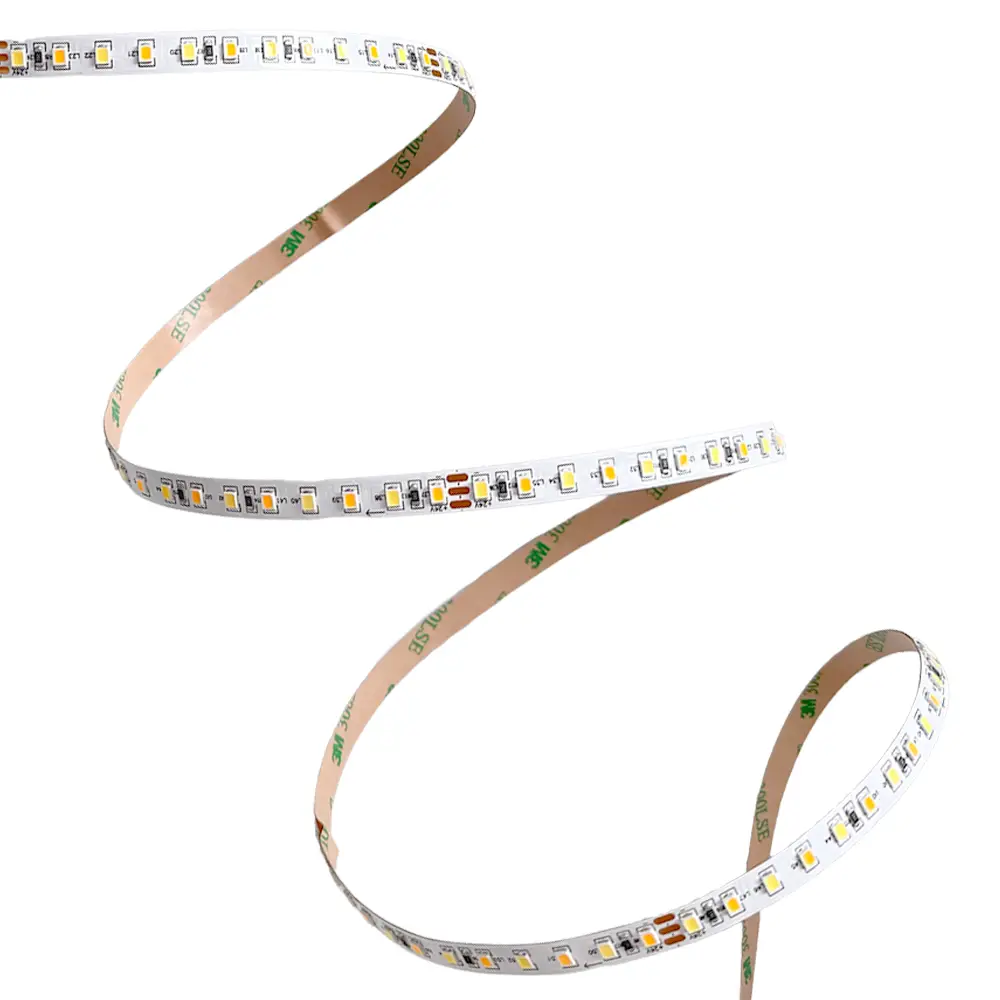
Voltage drop is the most critical technical issue with 10 m LED strip runs. As current flows through the strip’s thin copper traces, resistance causes voltage to decrease along the length. The result is visible: LEDs at the far end appear noticeably dimmer than those near the power supply.
At 24V DC, a 10 m strip with 14.4 W/m draws 6 A. The voltage drop across 10 m of standard strip copper traces can reach 2-3.5V (8-15%), which is visible to the human eye above 5% drop. At 12V, the problem is twice as severe — this is why 24V strips are strongly recommended for any run over 5 m.
There are three proven methods to minimise voltage drop on a 10 m LED strip:
Feed power to the centre of the 10 m run. This effectively creates two 5 m segments powered in parallel. Voltage drop is reduced to that of a 5 m length, which is typically acceptable (3-5%). This is the simplest and most common solution.
Connect power cables to both ends of the strip from the same power supply. Current flows from both ends toward the centre, halving the effective path length and the voltage drop. This is ideal when the power supply can be positioned at one end with a return cable run along the mounting surface.
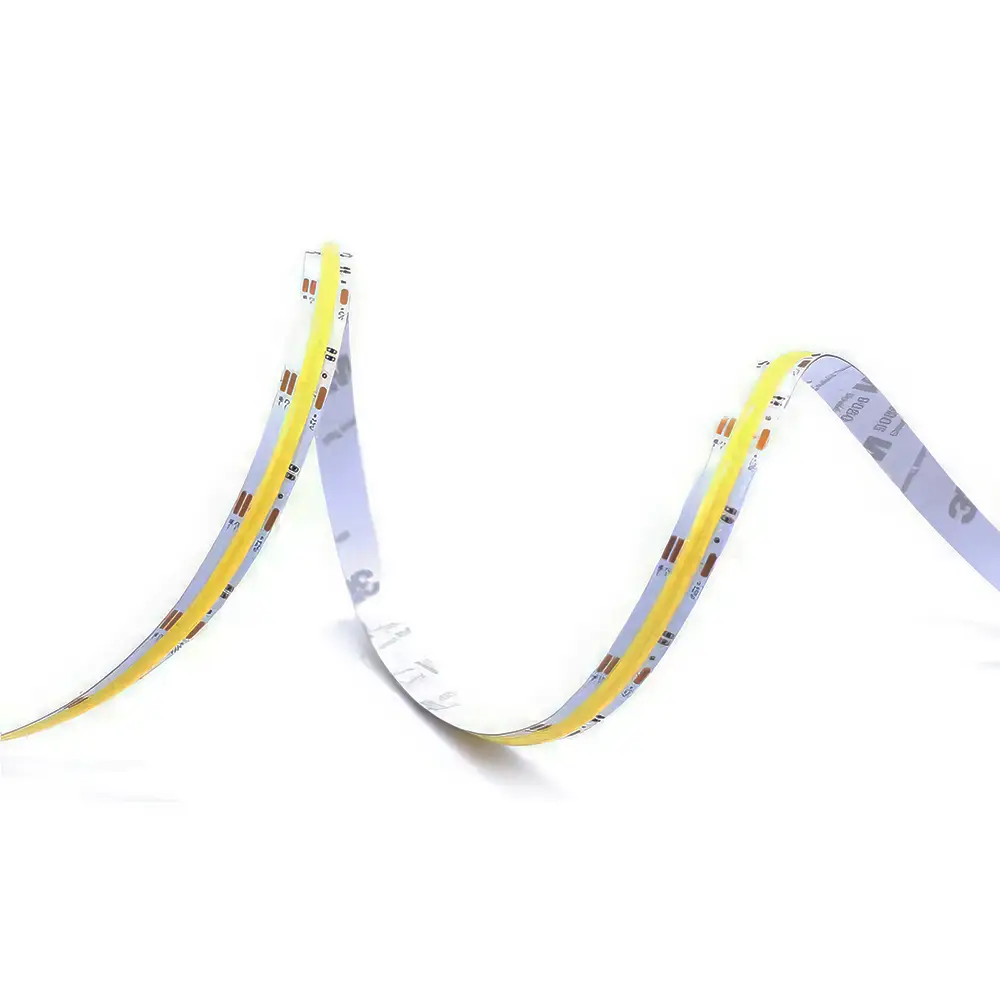
Cut the 10 m strip into two 5 m sections and wire each section independently to the power supply using separate feed cables. This completely eliminates voltage drop issues but requires more cabling. Use 0.75-1.5 mm2 cables for runs up to 10 m; use 1.5-2.5 mm2 for longer cable distances.
LED strips can only be cut at marked cut points — typically every 50 mm (for 120 LED/m strips) or every 100 mm (for 60 LED/m strips). Cutting between these points damages the circuit.
Two joining methods are available:
For 10 m continuous runs, consider these criteria:
Browse the full LED strip range at 2K-Trade, including 10 m reel options.
Yes, as long as both strips have the same specifications (voltage, LED type, density, and colour temperature). Connect them using solder or a strip-to-strip connector at the junction point. However, you must still address voltage drop — a simple end-to-end connection from one power supply will show dimming at the far end.
For the main feed cable from the power supply to the strip: use 0.75 mm2 wire for strips up to 10 W/m (total 100 W) and 1.5 mm2 wire for strips up to 20 W/m (total 200 W). If the cable run from PSU to strip exceeds 5 m, increase by one gauge size to compensate for cable voltage drop.
24V is strongly recommended for 10 m runs. At 24V, current is halved compared to 12V for the same power, which halves the voltage drop. A 10 m run at 12V can lose 15-25% brightness at the far end, which is clearly visible. At 24V, the drop stays in the 5-10% range, which is manageable with centre-feed or dual-end wiring.
A controller is not required for on/off operation — you can switch the power supply directly. However, a dimmer controller is highly recommended for brightness adjustment. For CCT (tuneable white) or RGB/RGBW strips, a controller is essential. Browse LED controllers at 2K-Trade.
The power supply can be concealed in a ceiling void, behind a plasterboard bulkhead, inside a furniture unit, or in a dedicated electrical cupboard. Ensure adequate ventilation around the PSU — typical operating temperature is 40-60 C at full load. For enclosed spaces, choose a fanless PSU or ensure at least 50 mm clearance on all sides.
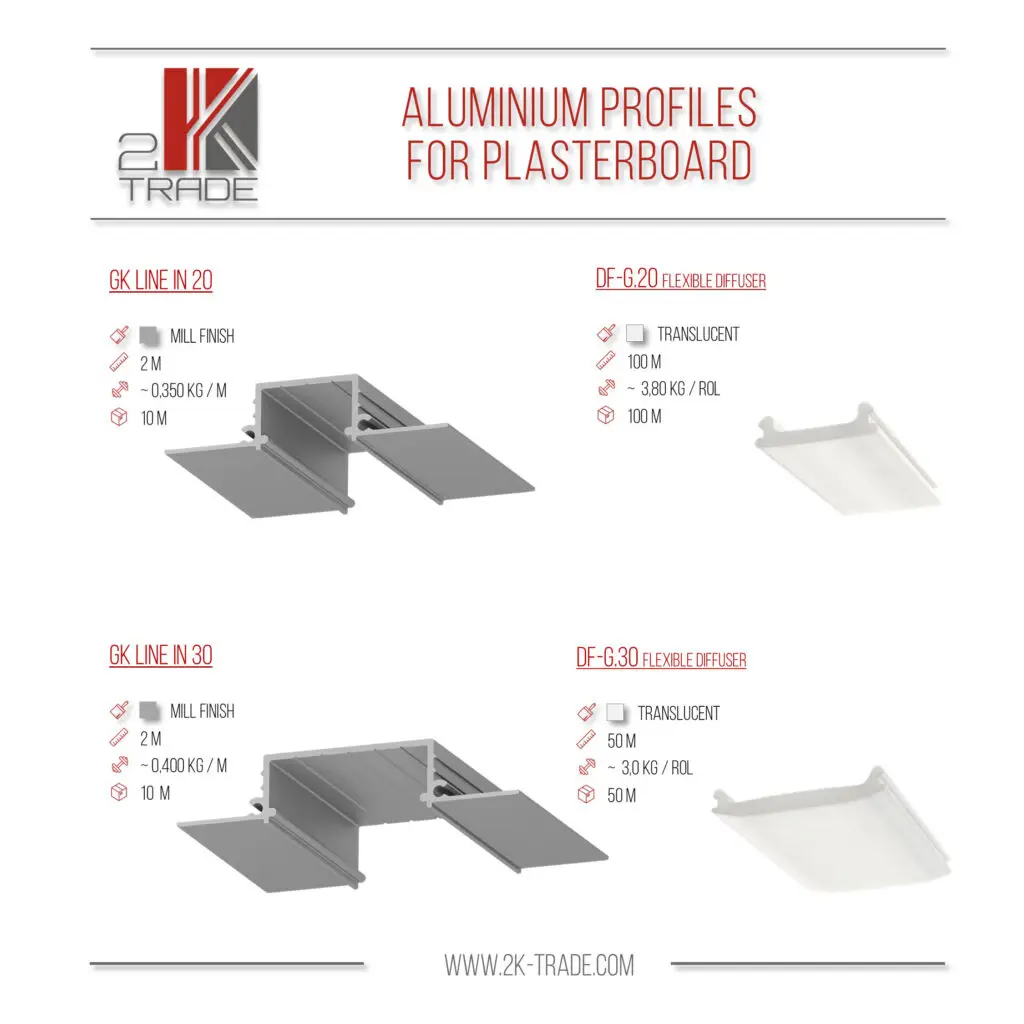
Guide to recessed LED profiles: types (GAMMA series for stretch ceilings, GK LINE
LED aquarium lighting requires specific spectral output to support aquatic life. Freshwater planted
LED ceiling lighting refers to systems using LED strips, modules, or panels installed