Recessed LED Profiles: Types, Installation and Component Selection
Guide to recessed LED profiles: types (GAMMA series for stretch ceilings, GK LINE

06.04.2026 | LED Lighting
Corner LED profiles — also called angled profiles, V-profiles, or 45-degree LED extrusions — are designed for installations where two surfaces meet at a right angle. They direct light at 45 degrees, producing soft indirect illumination that is ideal for accent and architectural lighting. This guide covers corner profile types, dimensions, applications, and selection criteria for professional LED installations.
A corner LED profile is an aluminium extrusion with a V-shaped or L-shaped cross-section. It is mounted at the junction of two surfaces — typically wall-ceiling, wall-wall, or furniture panel joints. The LED strip sits inside the channel at a 45-degree angle, and the diffuser covers the open face. The result is a clean line of angled light that washes adjacent surfaces evenly.
Like all aluminium LED profiles, corner profiles serve as heatsinks (extending LED strip life by 30-50%), provide mechanical protection, and house a diffuser for dot-free light output.
| Profile size (outer) | Channel width | Max strip width | Diffuser | Typical application |
|---|---|---|---|---|
| 16 x 16 mm | 10-12 mm | 10 mm | Frosted snap-in | Furniture, display cases, accent lines |
| 18 x 18 mm | 12-14 mm | 12 mm | Frosted snap-in | Kitchen worktops, cabinets, shelving |
| 20 x 20 mm | 14-16 mm | 15 mm | Frosted snap-in | Coving light, wall washing |
| 30 x 30 mm | 20-25 mm | 20 mm | Frosted/clear | Commercial retail, wide COB strips |
Standard section lengths are 2 m or 3 m. Profiles are cut to size on site using a mitre saw. Accessories include end caps, corner connectors (for L and T junctions), and mounting clips.
Corner profiles are suited to any installation where light needs to be emitted at an angle rather than straight down or sideways:
Corner LED profiles can be mounted in three ways:
After mounting, insert the LED strip into the channel (the strip’s self-adhesive backing sticks to the aluminium base) and snap in the diffuser. Connect to a 24V DC power supply.
The diffuser type significantly affects the light quality:
For most architectural and interior applications, frosted diffusers are the standard choice. The 15% brightness reduction is easily compensated by selecting a higher-output LED strip.
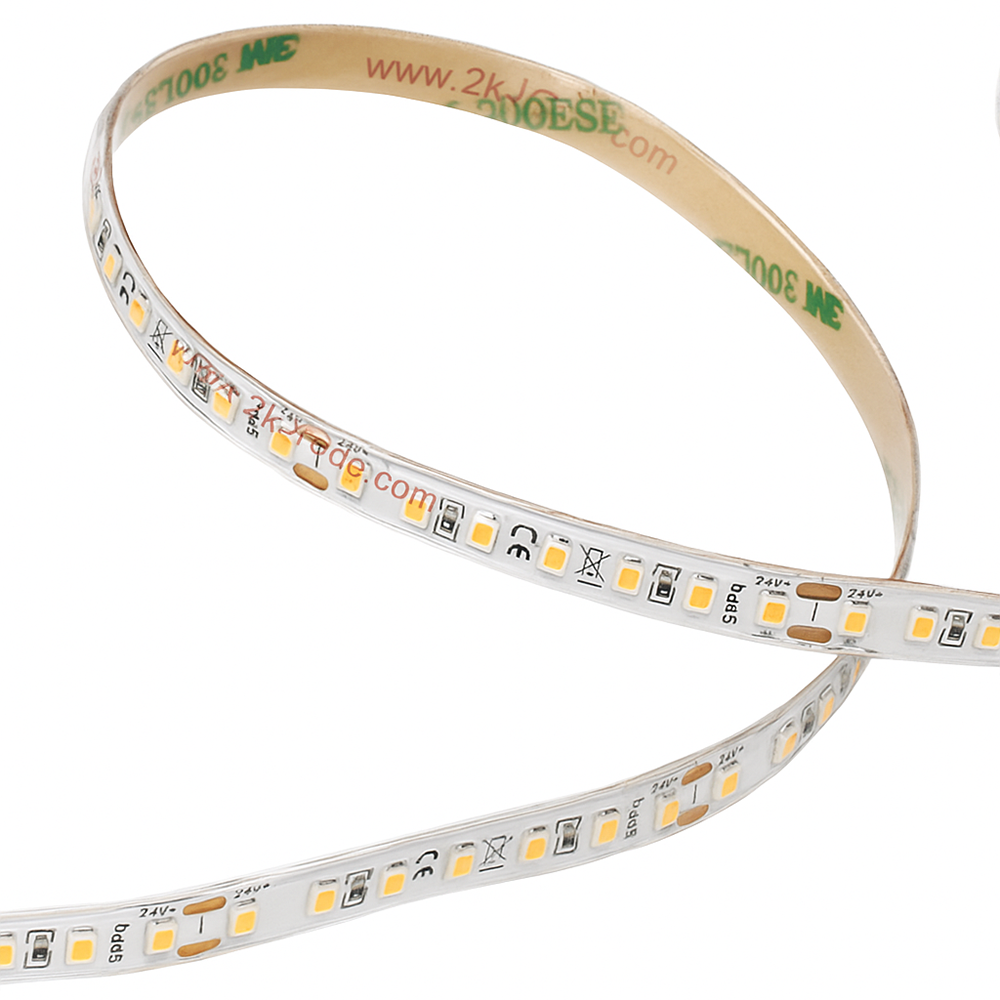
Corner profiles accept the same LED strips as other profile types. Common pairings:
Explore the full LED strip range and LED profiles at 2K-Trade.
Standard corner profiles position the LED strip at 45 degrees to both adjacent surfaces. Combined with the LED strip’s own beam angle (typically 120 degrees), this creates a wide wash of light across both the ceiling and wall (or both wall surfaces). The diffuser further broadens the light distribution.
Yes. Use a dedicated corner connector accessory, or mitre-cut both profile ends at 45 degrees for a clean butt joint. When mitre-cutting, ensure the LED strip can fold or be soldered around the corner to maintain a continuous light line.
The aluminium profile itself is corrosion-resistant and suitable for outdoor mounting. However, you must use an IP65-rated LED strip and seal the end caps and diffuser joints with silicone to prevent moisture ingress. For fully submerged or extreme weather applications, IP67/IP68 strips are required.
Corner profiles direct light at 45 degrees, creating indirect wall-wash or ceiling-wash effects. Surface-mounted profiles emit light straight down (or sideways, depending on orientation). Corner profiles are preferred for ambient and accent lighting; surface-mount profiles work better for direct task lighting.
You need a mitre saw (or fine-tooth hacksaw), a deburring tool or sandpaper, a drill/driver for screw mounting, and a measuring tape. For adhesive installation, clean the mounting surface with isopropyl alcohol before applying the tape. No specialist tools are required.
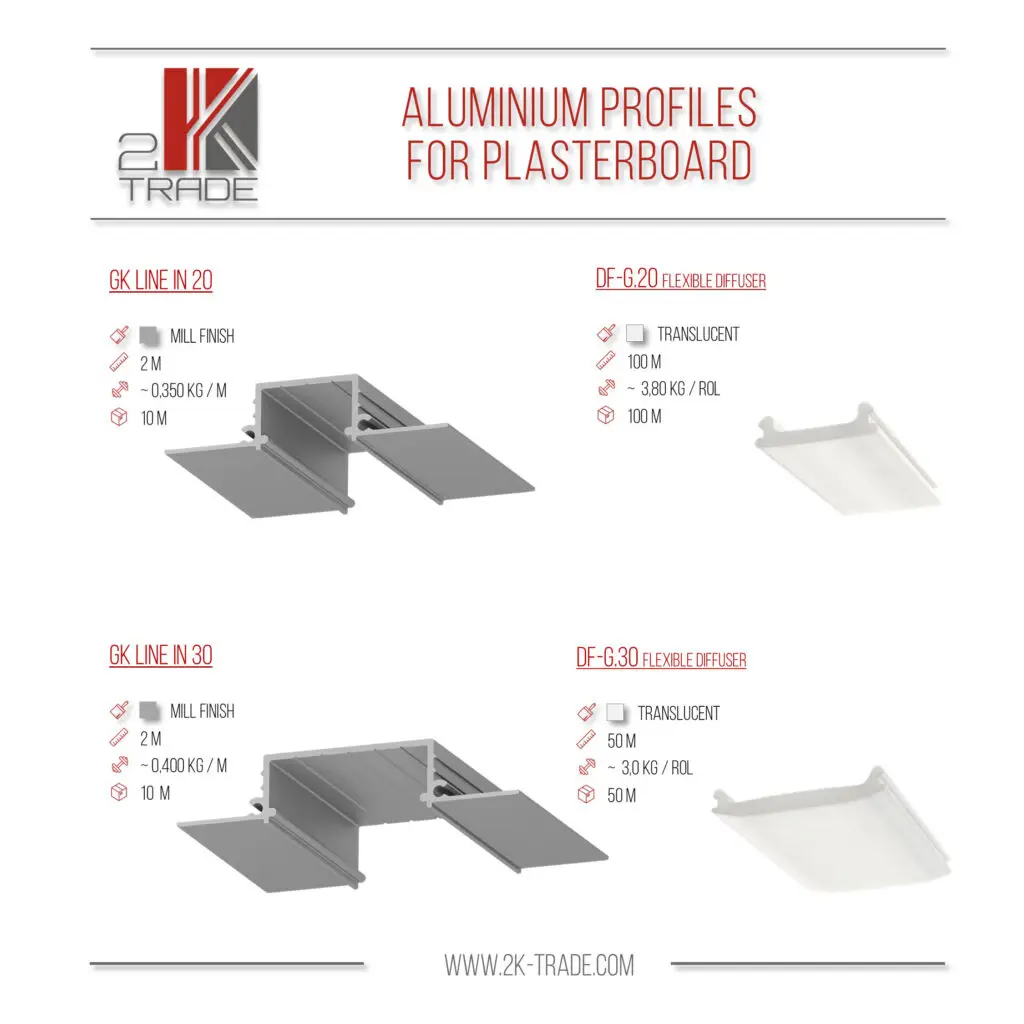
Guide to recessed LED profiles: types (GAMMA series for stretch ceilings, GK LINE
LED aquarium lighting requires specific spectral output to support aquatic life. Freshwater planted
LED ceiling lighting refers to systems using LED strips, modules, or panels installed