How to Choose a Stretch Ceiling Profile: Selection Guide
Profile selection guide for stretch ceilings: decision criteria (mounting method, room height, membrane

06.04.2026 | Profiles for Stretch Ceilings
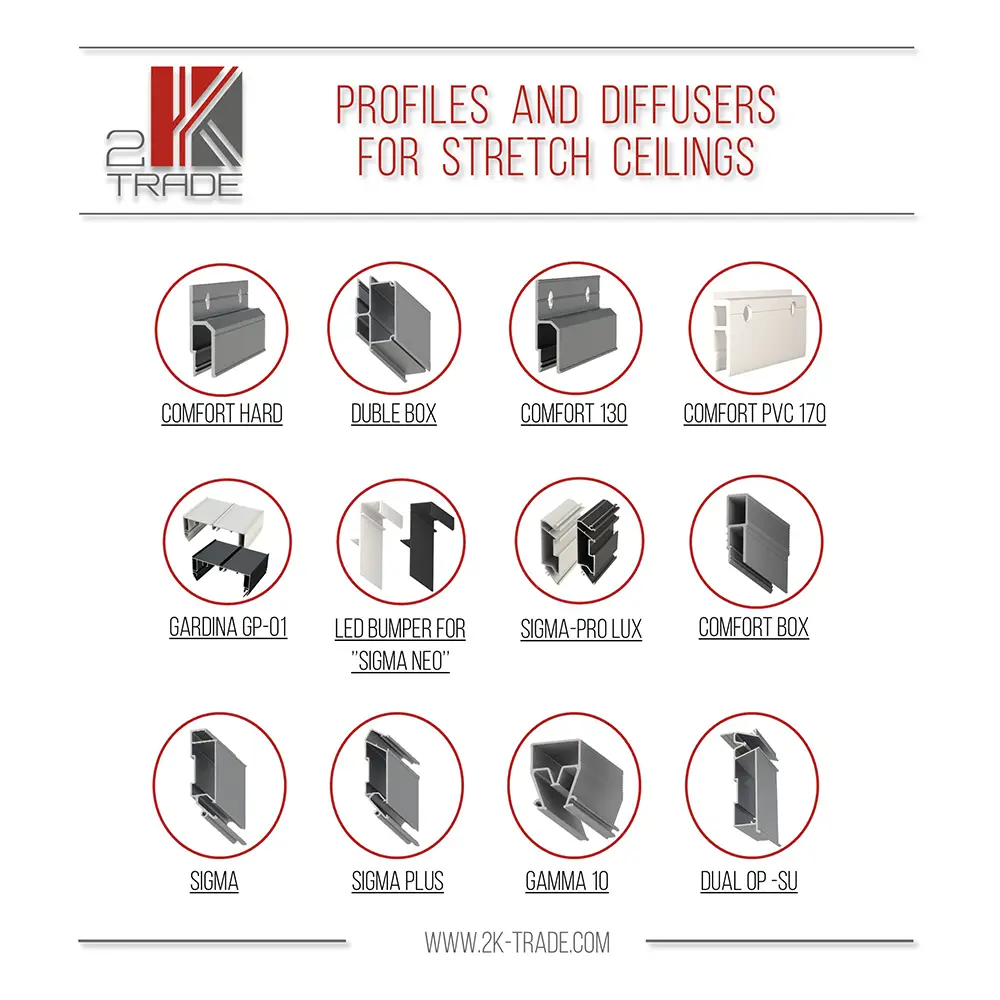
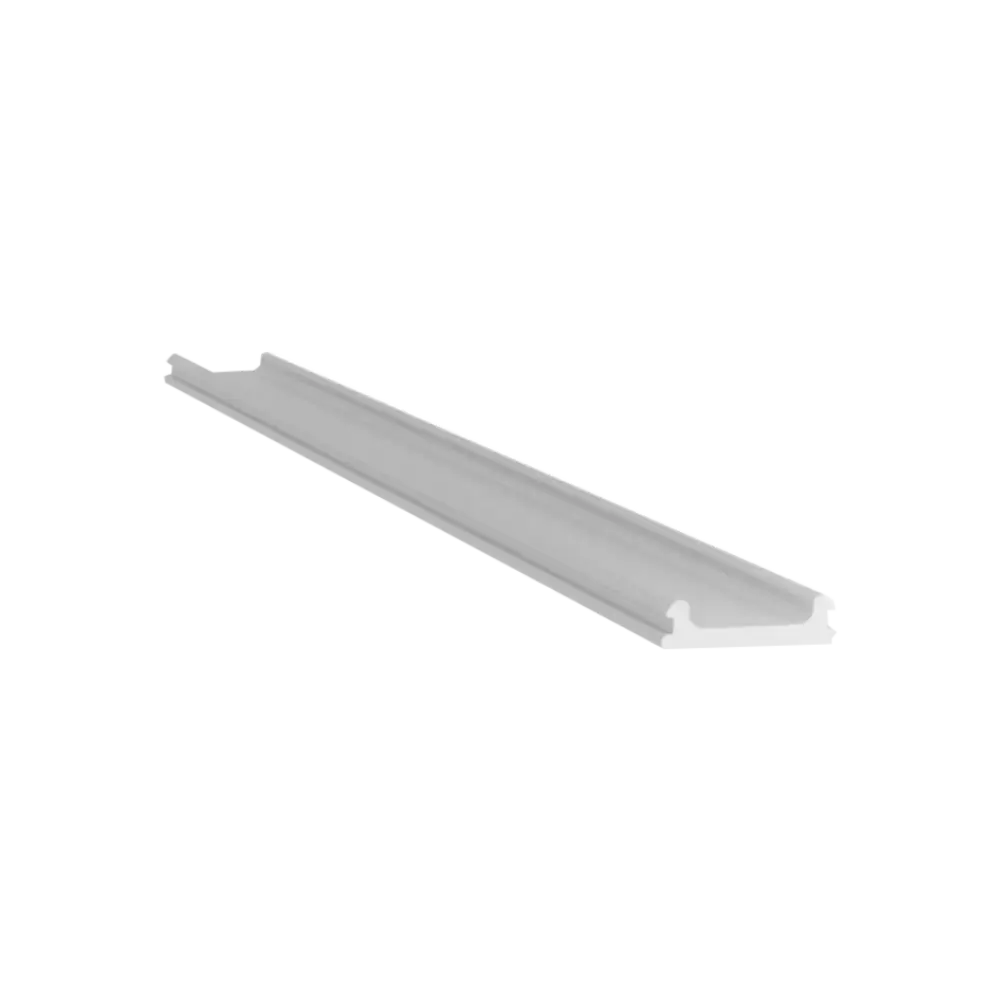
Ceiling profiles are aluminium mounting elements that form the load-bearing structure for stretch ceiling membranes. Every stretch ceiling requires a perimeter profile fixed to the walls or ceiling, in which the membrane is tensioned and locked using a harpoon or wedge system. Without the correct profile, stretch ceiling installation is not possible.
2K-Trade offers stretch ceiling profiles made of 6063-T5 aluminium alloy with 1.0-1.5 mm wall thickness. Standard lengths are 2.5 m or 3.0 m. Profiles fall into three main categories: classic, universal (SU), and specialist.
Classic profiles are the most popular category, used in the majority of stretch ceiling installations. They are designed for single-level membrane mounting without additional decorative features.
CLASSIC profiles are designed for wall mounting. The membrane is secured using a harpoon system. Key models differ by ceiling drop:
COMFORT profiles differ from CLASSIC in the internal geometry of the harpoon channel, which makes membrane insertion and removal easier. Preferred by experienced installers for faster fitting:
Profiles marked SU (from MODEL SU) combine wall and ceiling mounting options. The same profile can be fixed to either the wall or directly to the ceiling, giving installers greater flexibility in solving site-specific mounting challenges.
Available SU models:
Specialist profiles are designed for specific construction applications that go beyond standard single-level installation.
The CONTOUR series enables multi-level ceilings with defined transitions between planes. Used where the design requires different ceiling heights in one room:
The DELTA and DELTA-SU profiles enable stretch ceiling installation without drilling into walls. They mount to the ceiling via suspension brackets or clips — essential in rooms with lightweight partition walls or plasterboard that cannot withstand point loads.
DELTA BOX is a newer version with an integrated housing that conceals the fixings for a clean visual finish.
The DOUBLE-BOX profile allows mounting two stretch membranes simultaneously: upper and lower. Used in backlit ceilings where the upper membrane is translucent (light box) and the lower forms the main ceiling surface.
The STEP profile creates a defined step between two ceiling levels. The level difference is several centimetres, producing a cascade effect. This profile is often combined with LED lighting placed in the step.
| Profile model | Mount type | Drop (mm) | Membrane system | Application |
|---|---|---|---|---|
| CLASSIC 125 | Wall | 125 | Harpoon | Standard, limited height |
| CLASSIC 170 | Wall | 170 | Harpoon | Standard, most popular |
| CLASSIC 200 | Wall | 200 | Harpoon | Concealed installations, uneven ceilings |
| COMFORT 100 | Wall | 100 | Harpoon | Minimum drop |
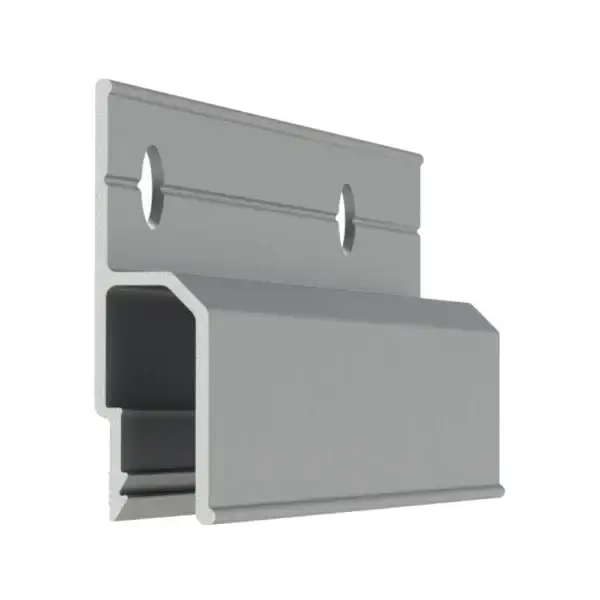
| COMFORT 130 | Wall | 130 | Harpoon | Standard, fast install |
| CLASSIC-SU 155 | Wall/ceiling | 155 | Harpoon | Universal mounting |
| COMFORT-SU 185 | Wall/ceiling | 185 | Harpoon | Universal, large rooms |
| DELTA | Ceiling | – | Harpoon | Drill-free, lightweight walls |
| CONTOUR-PRO LUX | Wall | – | Harpoon | Two-level with LED |
| DOUBLE-BOX | Wall | – | Harpoon | Two membranes, light box |
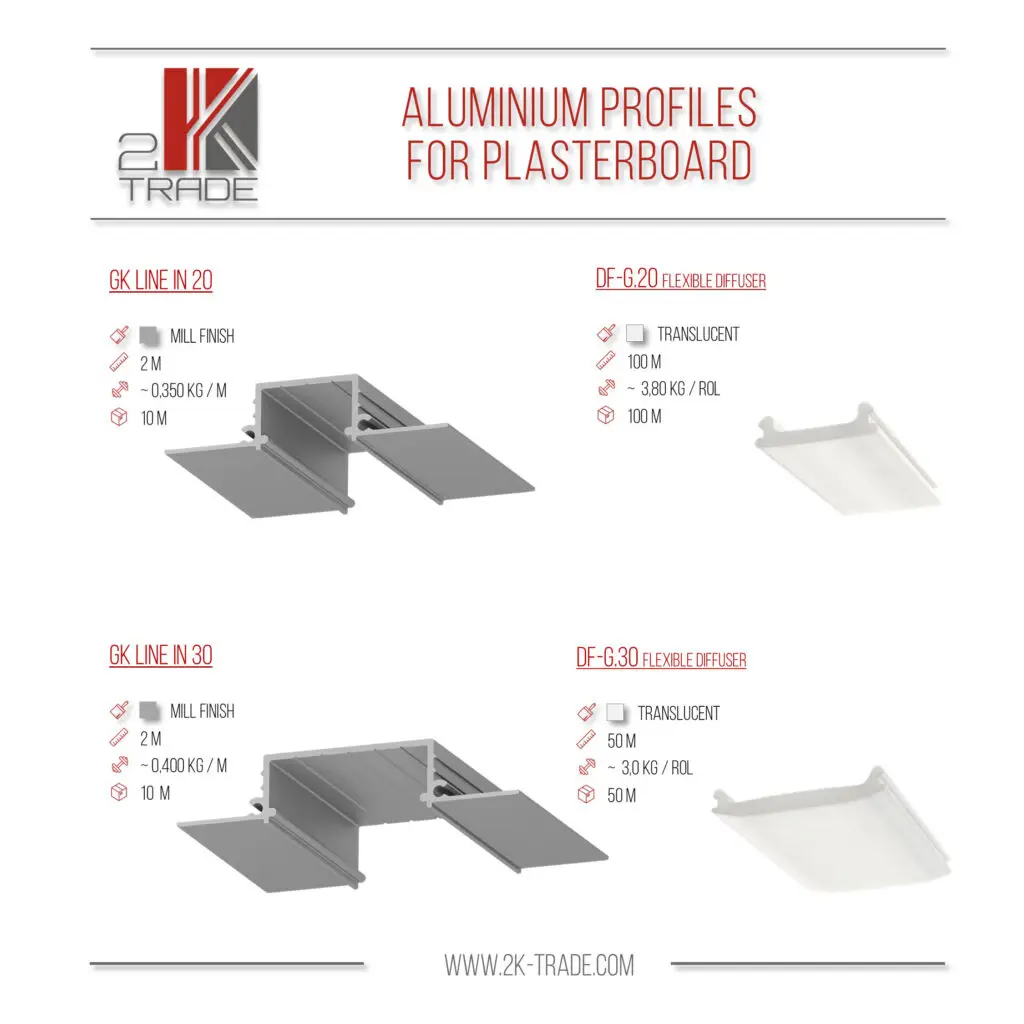
Many ceiling profiles can be combined with GAMMA series LED lighting profiles. This combination allows LED strips to be built into the stretch ceiling structure without additional light fittings. GAMMA LED profiles mount parallel to the perimeter profile and create a light line around the room.
Most common configurations:
Choosing the right profile depends on several technical factors:
Correct ceiling profile installation requires observing several rules:
For a standard residential room at 250-280 cm ceiling height, the most common choices are CLASSIC 170 or COMFORT 130. Both provide sufficient drop for membrane mounting and routing electrical cables.
The difference lies in harpoon channel geometry. COMFORT profiles have a modified channel that makes membrane insertion and removal easier. In practice, this means faster installation and the ability to re-stretch without damaging the profile. Strength parameters of both series are comparable.
Yes, provided you use appropriate anchors (e.g. molly or toggle bolts) and reduce fixing spacing to 8-10 cm. For high membrane tensions, reinforce the plasterboard with a steel subframe or use a DELTA profile mounted directly to the ceiling slab.
Profile quantity equals the room perimeter plus 10-15% allowance for cuts and corners. For a 4 x 5 m room: perimeter = 18 m, with allowance = 20-21 m. At 2.5 m profile length, that is 8-9 pieces.
2K-Trade profiles use the standard harpoon system, compatible with most harpoon membranes available on the European market. Before ordering, verify harpoon dimensions (width and thickness) against the chosen profile’s technical data.
The complete stretch ceiling profiles catalogue includes over 20 models in various length and finish options. Also available are profile gaskets, harpoons, and mounting accessories. B2B orders are fulfilled from the Lodz warehouse with shipping across Poland and Europe.
Profile selection guide for stretch ceilings: decision criteria (mounting method, room height, membrane
Guide to recessed LED profiles: types (GAMMA series for stretch ceilings, GK LINE
Complete catalogue of stretch ceiling profiles: CLASSIC, COMFORT, DELTA series, ceiling-mount SU variants,